
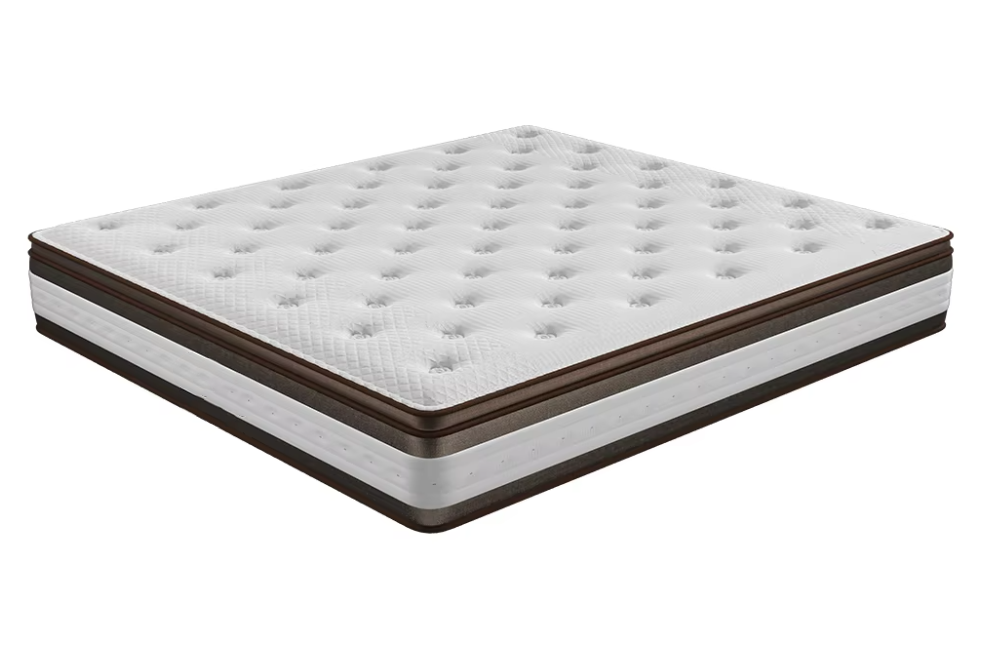
1. What is a hybrid mattress?
A hybrid mattress combines innnerspring coils (for support and bounce) with foam layers (memory foam, latex, or polyfoam) or sometimes wool/bamboo (for comfort and pressure relief). It merges the responsiveness of springs with the contouring of foam.
2. What are the key benefits of a hybrid mattress?
- Balances support and comfort: Coils prevent sagging, while foam relieves pressure points (e.g., hips, shoulders).
- Better temperature regulation: Coils promote airflow, reducing heat retention compared to all-foam mattresses.
- Responsive bounce: Ideal for combination sleepers (back, side, stomach) who need mobility when switching positions.
3. How long does a hybrid mattress last?
On average, 7–10 years. The lifespan depends on coil quality (e.g., pocketed vs. open coils) and foam density—higher-density foams (≥4 lbs/ft³) and durable coils extend longevity.
4. Who is a hybrid mattress best for?
- Sleepers who want contouring without the “sinking” feel of all-foam beds.
- Hot sleepers: Airflow from coils keeps the surface cooler.
- Couples: Pocketed coils minimize motion transfer, reducing disturbance from a partner’s movements.
5. How to choose the right hybrid mattress?
- Focus on coil count (300–800+ for queen size; higher = better support).
- Select foam type: Memory foam for deep contouring, latex for bounce, or gel-infused foam for extra cooling.
- Check firmness level: Medium (5–6/10) suits most sleepers; softer (3–4/10) for side sleepers, firmer (7–8/10) for back/stomach sleepers.